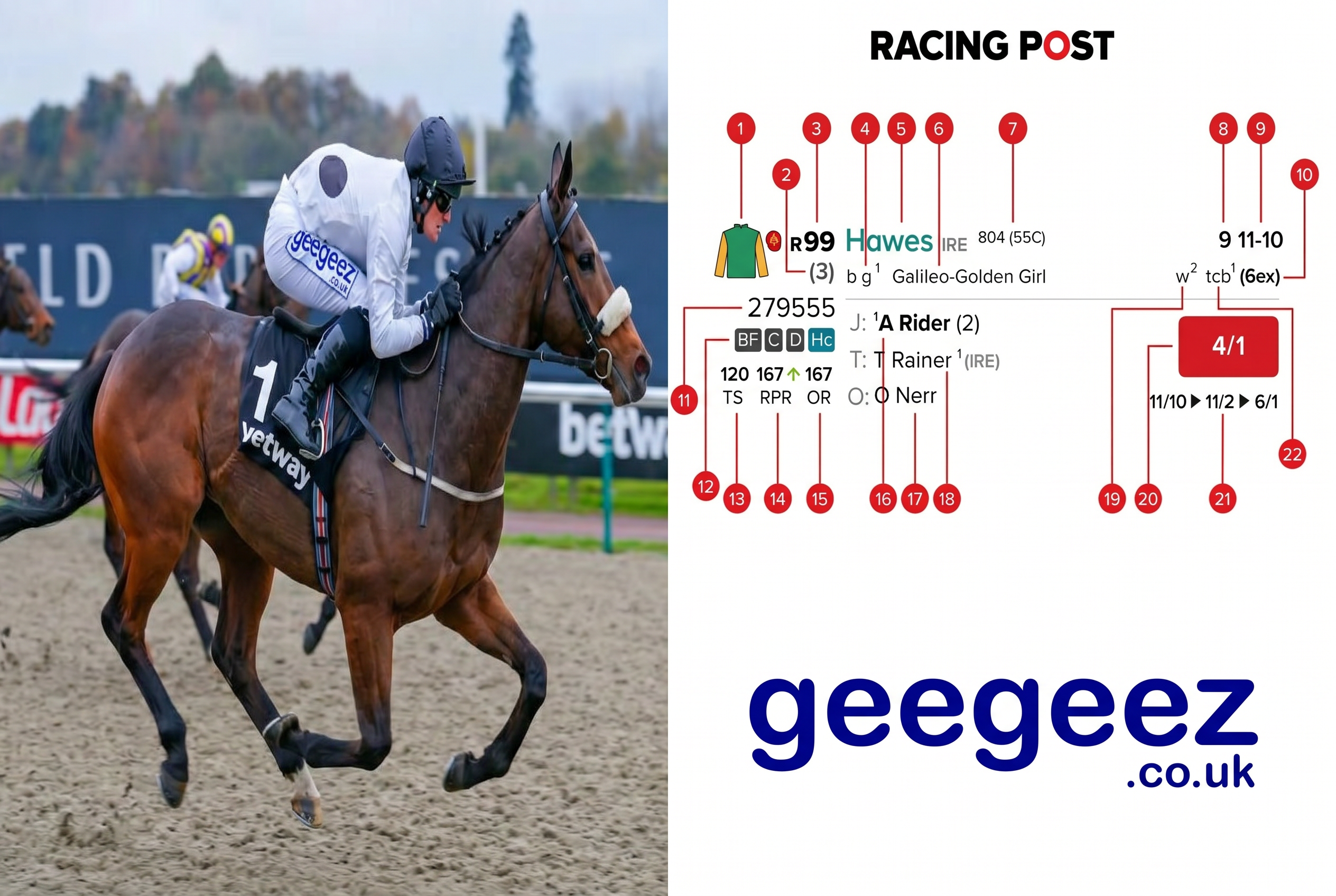
In the latest top insight by our friends at GeeGeez.co.uk – they tackle why the Racing Post Ratings can often be a trap for horse racing punters.
Why RPRs are a Trap, unless…Say GeeGeez.co.uk
The problem with most public ratings is not that they’re bad.
Numbers like Racing Post Rating are actually very good at finding winners.
But that makes them victims of their own success in that they’re typically overbet.
Meaning that the (many) returns on winning bets don’t pay for the losses on the non-winners.

How to find the Racing Post Rating sweet spot >>
JOIN GeeGeez GOLD for BETTER Racecards, Reports and ‘Must-See’ Form Tools

Geegeez LITE is our game-changing essentials package ideal for players looking for a quicker path to the winners’ circle.

What Are Racing Post Ratings?
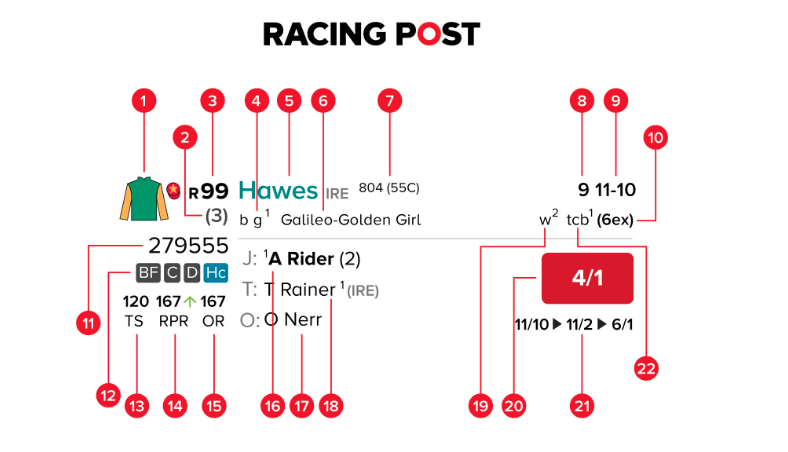
Racing Post Ratings, commonly known as RPRs, are performance figures created by the Racing Post to assess how well a horse has run in a race.
The ratings are designed to provide a simple way of comparing horses across different races, tracks and conditions, helping punters, owners and racing fans evaluate a horse’s true ability.
An RPR is expressed as a numerical figure, with higher numbers indicating better performances.
The rating takes into account several factors, including the race result, the quality of the opposition, the weight carried, race conditions and the overall strength of the form.
Unlike official handicapping ratings, which are produced by racing authorities, Racing Post Ratings are an independent assessment compiled by the Racing Post’s team of handicappers.
For example
If a horse records an RPR of 120, it is generally considered to have produced a stronger performance than a horse that earned an RPR of 110.
The figures are particularly useful when comparing horses that have not met on the racecourse but have competed in different races.
Many professional punters use RPRs as a key form tool because they can highlight horses that may have run better than the bare finishing position suggests.
Example of an RPR
Imagine two three-year-olds running in separate Derby trials:
- Horse A wins the Chester Vase and receives an RPR of 116
- Horse B wins the Dante Stakes and receives an RPR of 122
Although both horses won their races, the Racing Post handicappers believe Horse B’s performance was superior, perhaps because the opposition was stronger, the time was faster, or the overall quality of the race was higher.
As a result, Horse B would typically be viewed as having stronger credentials heading into the Derby.
RPRs can also be used to track a horse’s progression. If a horse’s recent ratings read 95, 102, 108 and 114, it suggests the horse is improving with experience and may still have more to offer.
Conversely, a sequence of declining ratings could indicate a horse is out of form or struggling to reproduce its best performances.
While Racing Post Ratings should never be used in isolation, they are one of the most widely respected form measures in British and Irish racing.
When combined with factors such as course form, ground conditions, trainer form and race tactics, RPRs can provide valuable insight into which horses are most likely to perform well in upcoming races.
With many punters using the Racing Post Ratings alongside the horse’s Official Ratings, that the British Handicap gives to each horse after they’ve had three runs.









Follow us
Read our latest news on any of these social networks!


Get the Inside Line
- Sign Up to our Horse Racing Newsletter.